
Top Jira Time Tracking Integrations That Help Teams Work Smarter

Jira is one of the most popular project management platforms for software development, IT operations, and agile teams. While Jira excels at issue tracking and workflow management, many organizations need more advanced time tracking capabilities for project budgeting, client billing, productivity analysis, and payroll reporting.
The good news is that Jira integrates with a wide range of time tracking tools designed to fill these gaps. Whether you’re managing a distributed engineering team, tracking billable hours, or monitoring project profitability, the right integration can significantly improve visibility into how time is spent.
Here are five Jira time tracking integrations worth considering.
1. TMetric
Best for: Comprehensive time tracking, project budgeting, and team productivity
TMetric is a powerful time tracking solution that integrates seamlessly with Jira, allowing users to track time directly from issues without disrupting their workflow. Teams can start timers from Jira tasks, automatically synchronize tracked hours, and generate detailed reports for projects, clients, and employees.
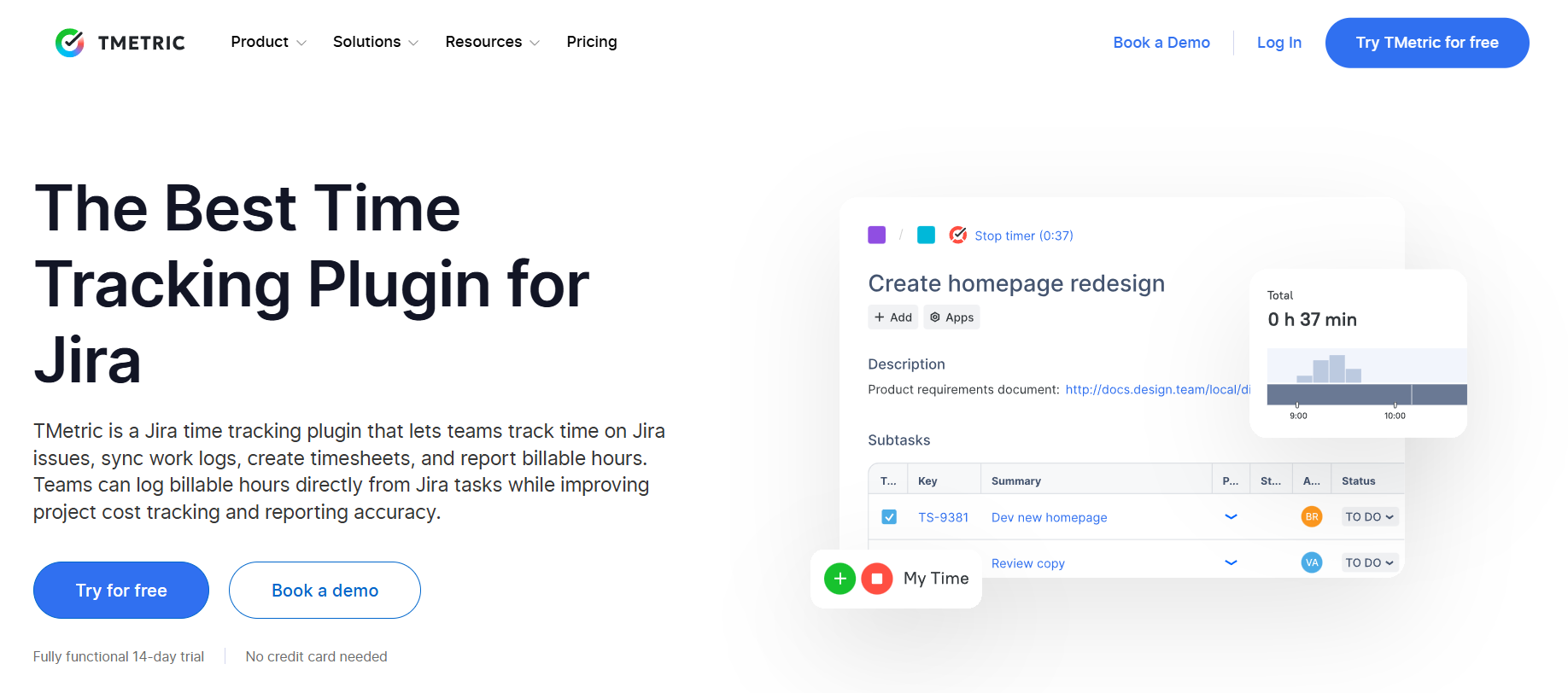
What makes TMetric stand out is its combination of simplicity and advanced management features. Beyond basic time tracking, it offers project budgeting, billable rate management, attendance monitoring, PTO tracking, and workforce analytics. This makes it suitable not only for development teams but also for agencies, consultancies, and professional service organizations that need accurate billing and resource planning.
Key Features
One-click time tracking from Jira issues
Project budgeting and cost tracking
Detailed productivity and workload reports
Billable and non-billable hour tracking
Time off and attendance management
Integrations with 50+ business tools
Pros
Easy setup and user-friendly interface
Strong reporting and budgeting capabilities
Supports both small teams and growing organizations
Cons
Some advanced reporting features may require higher-tier plans
2. Tempo Timesheets
Best for: Enterprise Jira users
Tempo is one of the most established time tracking solutions in the Jira ecosystem. Built specifically for Jira, it provides robust timesheet management, resource planning, and project tracking capabilities.
Many larger organizations choose Tempo because of its deep integration with Jira workflows and extensive administrative controls. Teams can manage approvals, forecast resources, and analyze project performance without leaving the Atlassian environment.
Key Features
Native Jira experience
Timesheet approvals
Resource planning tools
Capacity management
Custom reporting
Pros
Deep Jira integration
Strong enterprise functionality
Extensive customization options
Cons
Can be complex for smaller teams
Higher learning curve
3. Clockify
Best for: Teams looking for a generous free plan
Clockify is a popular time tracking platform known for offering a comprehensive free tier. Its Jira integration enables users to track time from issues and synchronize worklogs between the two platforms.
The platform is particularly appealing to startups and small businesses that need basic time tracking without significant upfront costs.
Key Features
Time tracker and timesheets
Project and task tracking
Team activity reports
Billable hour management
Browser extensions
Pros
Generous free plan
Easy to adopt
Cross-platform availability
Cons
Advanced analytics are limited compared to specialized tools
4. Everhour
Best for: Agencies and client-focused teams
Everhour focuses on helping teams understand project profitability and resource allocation. Its Jira integration provides time tracking directly within issues while offering detailed reporting and budgeting functionality.
Agencies often appreciate Everhour’s emphasis on client billing, invoicing, and budget monitoring.
Key Features
Embedded Jira time tracking
Budget management
Billing and invoicing support
Resource planning
Visual reporting dashboards
Pros
Excellent budgeting tools
Clean interface
Strong client-facing features
Cons
Pricing may be less attractive for larger teams
5. TimeCamp
Best for: Automated time tracking
TimeCamp offers automatic time tracking features that reduce the need for manual timer management. The Jira integration helps teams connect tracked work with project tasks while generating productivity insights.
Organizations looking to minimize manual time entry often find TimeCamp particularly useful.
Key Features
Automatic time tracking
Productivity monitoring
Project budgeting
Attendance tracking
Reporting and analytics
Pros
Reduces manual data entry
Helpful productivity insights
Supports project budgeting
Cons
Automatic tracking may require adjustment periods for some teams
Choosing the Right Jira Time Tracking Integration
The best Jira time tracking integration depends on your team’s priorities.
Choose TMetric if you need a balanced solution combining time tracking, budgeting, attendance management, and productivity reporting.
Choose Tempo Timesheets if your organization requires enterprise-grade Jira-native functionality.
Choose Clockify if cost efficiency is your primary concern.
Choose Everhour if client billing and project profitability are central to your workflow.
Choose TimeCamp if you want to automate as much time tracking as possible.
A well-chosen Jira integration can transform time data into actionable insights, helping teams improve planning accuracy, control project costs, and make better business decisions.